Peptide Purity Resolution Imaginative Peptides-peptide Drug Exploration
Comprehending Peptide Pureness Screening
Straight from the synthesizer with marginal processing-- commonly just cleavage from the resin and precipitation. Purity varies commonly, from 40% to 80%+ depending upon sequence size and problem. Crude peptides appropriate for applications where purity isn't vital, such as antibody manufacturing or first screening assays where the target peptide simply requires to be existing, not leading. Very closely associated with truncations, deletion peptides are full-length chains that are missing out on one amino acid somewhere in the center. If covering isn't completely reliable, an uncoupled chain can continue to lengthen in succeeding steps, creating a peptide that's only one deposit except the target.These adjustments change the peptide's organic activity and chromatographic account. Peptides are sensitive to temperature, light, and chemical atmospheres, making them prone to destruction, which affects effectiveness. BOC Sciences offers increased security, light stability, and enzymatic degradation experiments to methodically evaluate formula security dangers.
Exactly How To Read A Peptide Pureness Test: Hplc, Mass Spectrometry And Coa Interpretation For Uk Researchers (
- We employ GC-MS, ICP-MS, and various other approaches to identify impurities, making sure item security and regulative conformity.
- For a lot of research functions, high pureness indicates you can be confident that the vast majority of the particles in your vial are the appropriate peptide, which assists make sure experimental uniformity and reproducibility.
- Peptide purity is generally shared as a percent, such as 95% or 98%.
- Lab validation for peptides indicates utilizing scientific examinations to verify a peptide's identification, purity, and structure.
- This is why reputable distributors give both HPLC and MS data on their Certificates of Analysis.
For the majority of visitors of a peptide novices' guide, "research-grade" is the realm you operate in. It ensures you that the peptide will carry out well in experiments (thinking purity and identity are as mentioned), however it likewise carries the caution "Research study Usage Just." This phrase is generally published on the vial or documents. It acts as a pointer and legal disclaimer that the product is not a therapeutic or palatable.
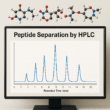
Kinds Of Contaminations Hplc Spots
A solid test record can sustain pureness, identity, and batch traceability. It does not turn a research study compound into a medical product, and it does not replace Check out the post right here speculative recognition in the scientist's own system. Peptide pureness isn't just a number on Synthetic Peptides a label-- it's a home window into the high quality of the synthetic procedure and a forecaster of exactly how dependable your research study results will be. At Ethos Analytics, we offer specialized peptide testing and quantitation solutions to sustain research study, pharmaceutical, and nutraceutical applications. Our laboratory makes use of modern instrumentation and validated techniques to guarantee exact, reproducible information across also the most complicated peptide matrices. William is a research study expert at Peptides Laboratory UK, specialising in study peptides, research laboratory compounds, and sourcing requirements for high-purity peptide products.
Deamidation Products
The most strict grade, involving mindful HPLC filtration-- sometimes multiple rounds-- and extensive QC. Required for quantitative research studies, structural biology, in vivo research designs, and any type of application where even small amounts of pollutant could influence results. This is the grade where the cost increases most dramatically, due to the fact that attaining that last 1-- 3% of purity calls for disposing of a substantial fraction of the manufactured material. A removal peptide missing out on a single deposit might still bind to the same receptor, however with various affinity or selectivity. In concentration-response experiments, these pollutants can move curves, flatten plateaus, or introduce biphasic behavior that covers truth activity of the target compound. The isoelectric point (specialty) is a crucial criterion for understanding peptide solubility and behavior in different environments.
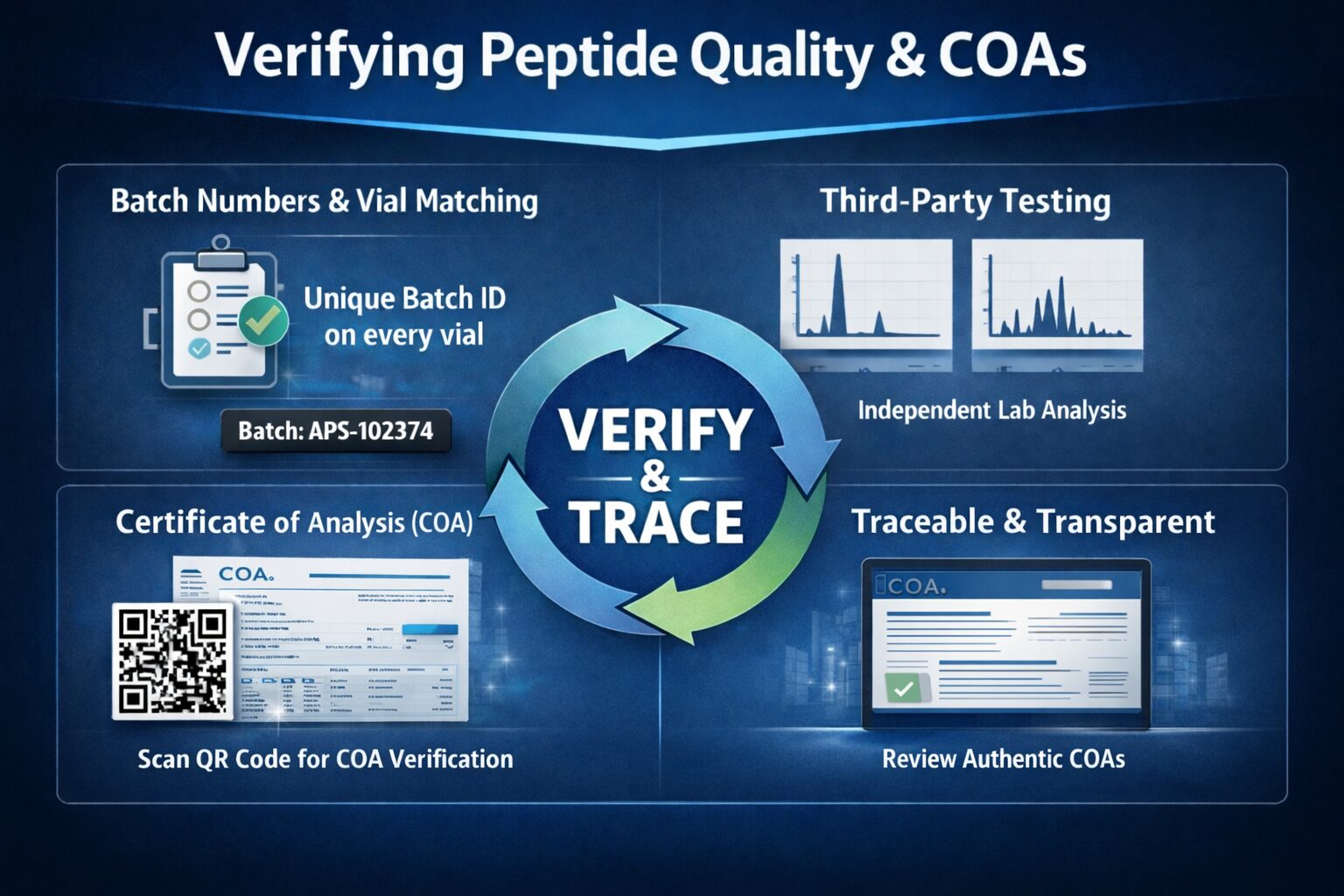
Peptide testing is the collection of analytical checks used to evaluate a peptide example prior to it is made use of in a research process. In useful COA evaluation, the term typically refers to purity testing, identification screening, and paperwork testimonial. Purity screening asks just how much of the discovered example is the main peptide versus relevant pollutants. Identity screening asks whether the determined mass or sequence-related evidence matches the intended peptide. Documentation review asks whether the record is batch-specific, deducible, and detailed sufficient to be examined. Peptide testing is the logical process made use of to confirm that a research peptide is both pure and correctly identified. Dependable peptide screening labs will provide a suite of modern analytical techniques-- HPLC combined with MS is a must, and schedule of additional approaches like capillary electrophoresis or amino acid evaluation is a benefit. Be careful of labs that do not use mass spectrometry alongside HPLC, as this could miss crucial identification info. In a similar way, stay clear of labs that can not show confirmed logical methods. According to ICH standards, confirmed approaches imply the laboratory has developed the examination's accuracy, accuracy, discovery limits, and so on, ensuring the information you get are reliable.